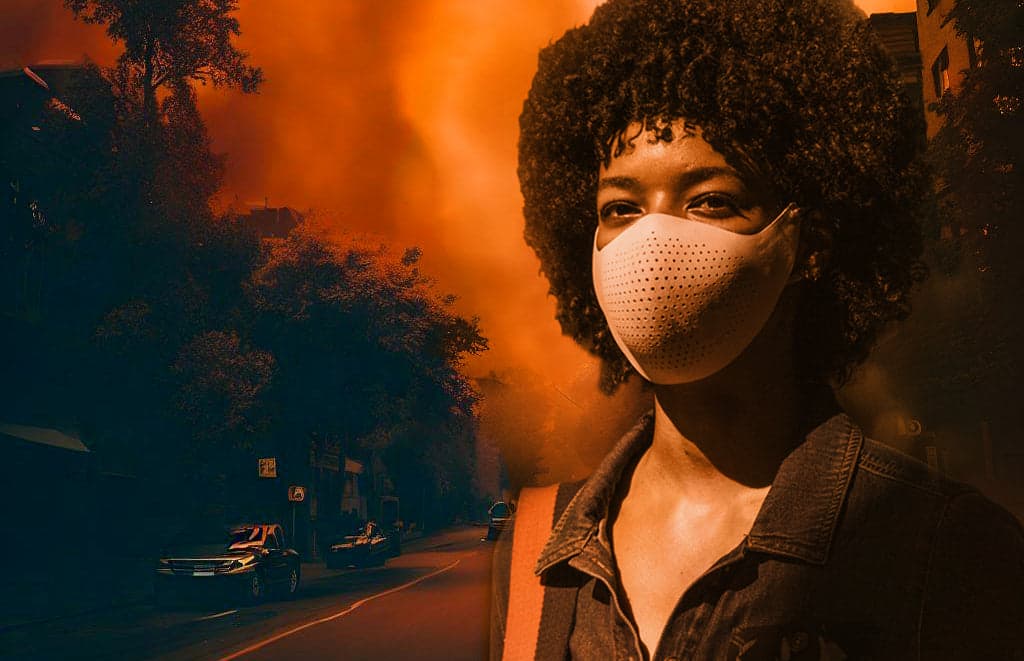
Wildfire Season 2026: Why Respiratory Protection Matters More Than Ever
With wildfire seasons growing longer and more intense, understanding PM2.5 protection has never been more important. Here's what you need to know.
Wildfire seasons are growing longer, more intense, and harder to predict. In 2025 alone, wildfire smoke affected air quality across dozens of major metropolitan areas — many hundreds of miles from the nearest active fire. For millions of people, respiratory protection is no longer optional during peak season.
Understanding PM2.5 and Your Health
Wildfire smoke contains PM2.5 particles — fine particulate matter smaller than 2.5 micrometers. These particles are small enough to penetrate deep into your lungs and even enter your bloodstream. Short-term exposure can cause coughing, difficulty breathing, and eye irritation. Long-term exposure is linked to heart disease, stroke, and lung cancer.
The EPA considers any AQI reading above 100 to be unhealthy for sensitive groups, and above 150 to be unhealthy for everyone. During wildfire events, AQI can exceed 300 — classified as "hazardous."
Why Standard Masks Fall Short
Not all masks are created equal when it comes to wildfire smoke. Cloth masks and standard surgical masks provide minimal protection against PM2.5 particles. Even some KN95 masks with poor seal design allow smoke-laden air to bypass the filter entirely. Effective wildfire protection requires two things: high-efficiency filtration media AND a proper seal against your face.
- Cloth masks: <30% PM2.5 filtration — not suitable for wildfire smoke
- Surgical masks: ~60% PM2.5 filtration — poor face seal allows leakage
- Standard KN95: ~95% filtration — but only if the seal is maintained
- AirPop Light SE: >99% filtration — 360° seal prevents gap leakage
The AirPop Advantage
AirPop masks are engineered specifically for this challenge. Our 3D Aerodome structure maintains >99% particle filtration efficiency while the patented 360-degree seal prevents gap leakage — the primary failure mode of most consumer masks. Combined with 2x the breathability of standard N95 masks, AirPop delivers protection you can actually wear for extended periods without discomfort.
99.3% particle filtration at 0.3μm • 2x breathability vs N95 • Washable up to 10 times while maintaining >97% PFE • Tested to ASTM F3502, NIOSH, and FDA standards.
Preparing for Wildfire Season
Stock up before fire season begins. Have at least two masks per family member so one can be washed while the other is in use. Monitor your local AQI using apps like AirNow or PurpleAir. When the AQI exceeds 100, wear your AirPop mask outdoors. Keep windows closed and run an air purifier indoors.
- 1Stock at least 2 AirPop masks per family member before fire season
- 2Download an AQI monitoring app (AirNow, PurpleAir, or IQAir)
- 3Create an indoor clean-air room with sealed windows and an air purifier
- 4Wear your mask outdoors whenever AQI exceeds 100
- 5Replace or wash filters according to usage — do not reuse past rated life
Visibility is not a reliable indicator of air quality — dangerous PM2.5 levels can exist even when skies appear clear. Always check AQI readings before heading outside.
Related Articles

Understanding PM2.5: The Invisible Threat to Your Health
PM2.5 particles are too small to see, but their impact on your lungs, heart, and brain is anything but invisible. Learn what PM2.5 is, where it comes from, and how to protect yourself every day.

AQI Explained: How to Read and Act on the Air Quality Index
The Air Quality Index is your first line of defense against harmful pollution — but only if you know how to read it. This guide breaks down AQI levels, color codes, and the actions you should take at each stage.